Best Meat Thermometer for Grilling
Last updated: February 16, 2026 · 3 min read
Guessing whether your steak is medium-rare or your chicken is fully cooked is how grilling goes wrong. A good meat thermometer eliminates the guesswork entirely, and at $15-30, it's the cheapest upgrade you can make to your grilling game. We tested instant-read and probe options to find what works best over live fire.
Our Top Picks
Instant-Read vs Leave-In Probe: Which Do You Need?
Instant-read thermometers give you a temperature reading in 2-5 seconds. You insert, read, remove. Perfect for steaks, burgers, chicken pieces, and anything you're actively monitoring. They're faster and more versatile.
Leave-in probe thermometers stay in the meat throughout cooking, giving you continuous temperature monitoring. Essential for large cuts like brisket, whole chicken, pork shoulder, and anything you're cooking low-and-slow. You can monitor temperature without opening the grill lid and losing heat.
For most grillers, an instant-read handles 80% of needs. If you smoke meat or do long cooks, a leave-in probe or wireless probe is worth having.
Best Instant-Read: ThermoPro TP19H
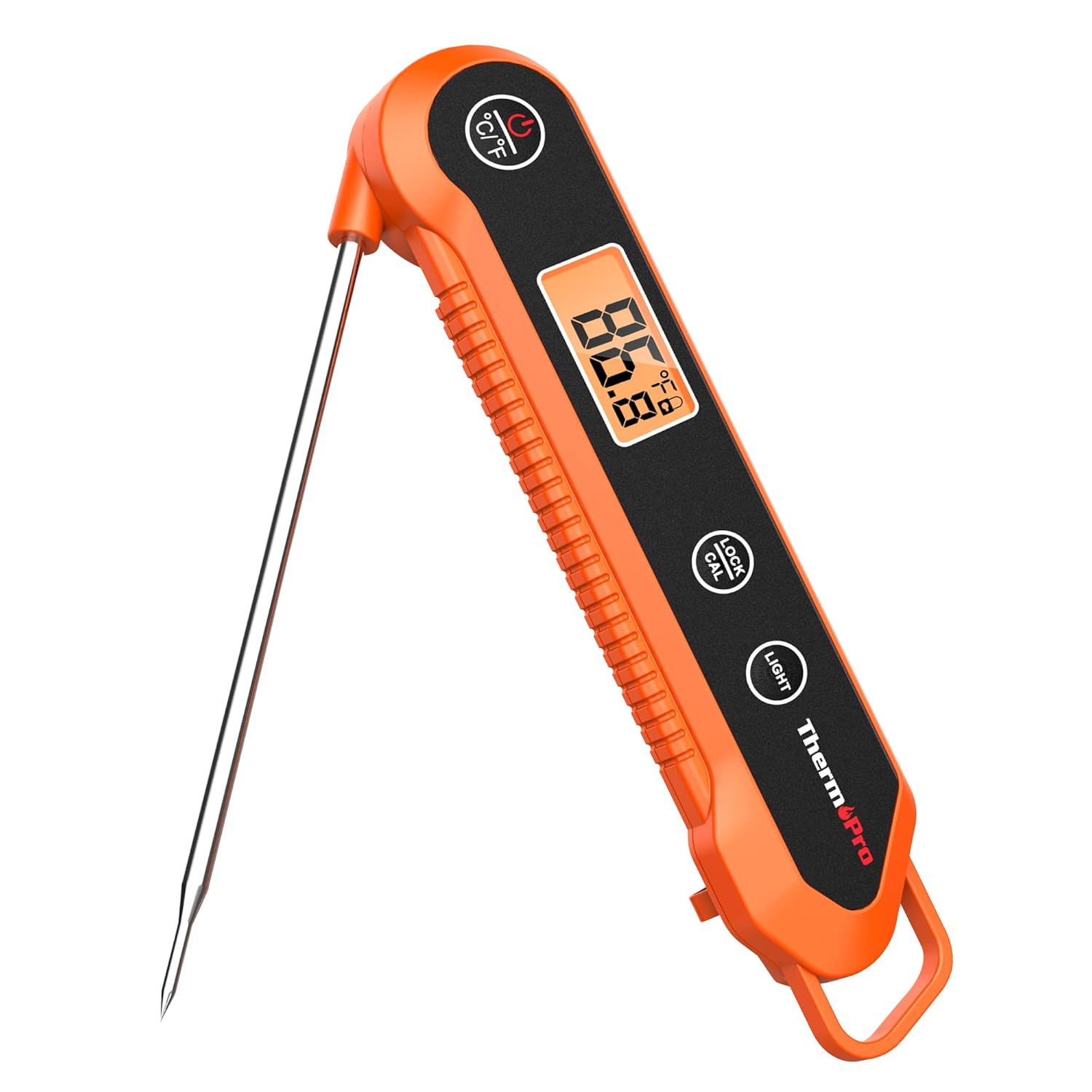
The ThermoPro TP19H is the best instant-read thermometer for the money. It reads temperature in 2-3 seconds with ±0.9°F accuracy — accurate enough that it matches thermometers costing 5x more. The foldaway probe auto-powers on when extended and off when folded, meaning it's always ready and the battery lasts for years.
Waterproof rating means it handles grill splatter and marinades without issue. The backlit rotating display means you can read it in any orientation, including upside-down while leaning over a hot grill. At around $15, it's the thermometer that makes every other kitchen tool purchase look extravagant.
Safe Temperatures to Know by Heart
These temperatures are the difference between safe, delicious grilling and a ruined cookout:
Beef (steaks/burgers): 125°F rare, 135°F medium-rare, 145°F medium, 160°F well done. Ground beef must reach 160°F. Chicken: 165°F — no exceptions, no pink, no guessing. Pork: 145°F (formerly 160°F — USDA updated this). Lamb: 145°F for medium-rare. Fish: 145°F or until it flakes easily.
The $15 thermometer pays for itself the first time it saves you from serving undercooked chicken to guests or overcooking a $40 ribeye to leather.
Thermometer Care for Grill Use
Grilling is harder on thermometers than indoor cooking. The heat, smoke, and outdoor conditions require a few care habits. Never leave an instant-read thermometer in the grill while cooking — the ambient heat will damage the electronics. Always insert into the thickest part of the meat, away from bone (bone conducts heat and gives false high readings).
Clean the probe with a sanitizing wipe or alcohol swab between different meats to prevent cross-contamination. When done, rinse the probe under water and dry before folding. The ThermoPro's waterproof design handles this easily.
Frequently Asked Questions
What is the most accurate meat thermometer for grilling?
The ThermoPro TP19H is accurate to ±0.9°F and reads in 2-3 seconds — sufficient for all home grilling needs. For professional-level accuracy, the Thermapen One (±0.5°F, 1-second read) is the gold standard at $99. For home grilling, the $15 ThermoPro is genuinely all you need.
Where do you insert a meat thermometer on a grill?
Insert into the thickest part of the meat, avoiding bone, fat, and gristle. For steaks and chops, insert from the side horizontally — not from the top — so the probe tip lands in the center. For whole chicken, insert into the thickest part of the thigh without touching bone.
Can meat thermometers be left in the grill while cooking?
Only leave-in probe thermometers are designed to stay in meat during cooking. Instant-read thermometers (like the ThermoPro TP19H) should only be inserted to check temperature, then removed. Leaving an instant-read in a grill will damage or destroy the electronics.